

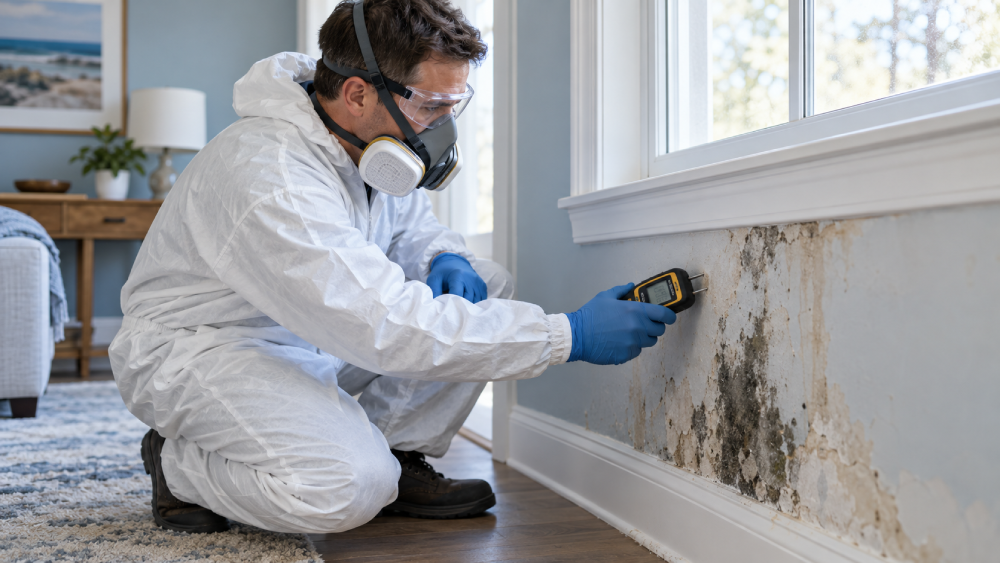
Mold remediation is required once growth covers more than 10 square feet, follows a flood or leak, shows up in your HVAC system, or lines up with health symptoms at home. Smaller spots on tile or caulk are often safe to clean yourself. Anything bigger, or tied to one of those situations, needs a professional.
Our mold remediation in Raleigh team gets this question all the time. Below is how to tell which category you're in.
The 10-Square-Foot Guideline EPA Uses to Judge Mold Size
EPA sorts mold into three size categories. Under 10 square feet counts as small. A building occupant can often handle that with basic gear: an N-95 respirator, gloves, and goggles. No sealed containment needed.
Between 10 and 100 square feet is a gray zone. Professional judgment decides how much containment the job needs. Past 100 square feet, EPA calls for full protective equipment and full containment. That's not a weekend project for most homeowners.
Size isn't the only factor, though. EPA's guidance says a more cautious approach makes sense even for a small area if you suspect a toxic mold species, if hidden mold is likely spreading behind a wall, or if someone in the home has severe allergies, asthma, or a weak immune system.
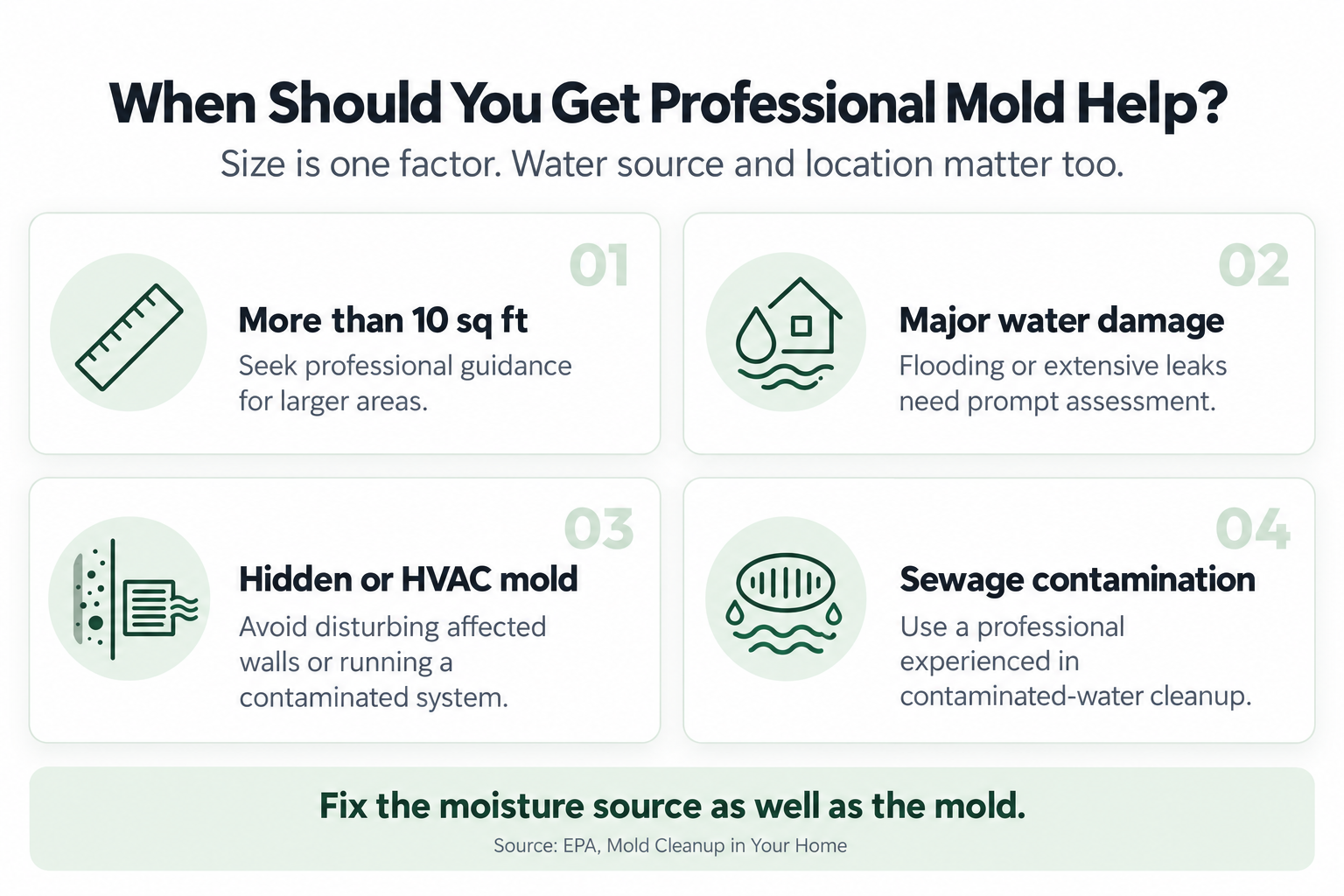
Five Situations That Call for Professional Remediation
1. Visible Mold Covering More Than 10 Square Feet
Dark spotting across a section of ceiling, wall, or flooring that adds up to roughly a card table's worth of space has passed what EPA considers DIY-sized. At that size, spores have usually spread past what you can see. Scrubbing the visible patch won't finish the job.
2. Mold Following a Flood, Burst Pipe, or Major Leak
Water events create ideal mold conditions fast. The CDC says to clean, dry, or remove wet items within 24 to 48 hours to prevent mold from taking hold. That's how little time you actually have. If a pipe burst, a roof leaked for weeks, or your home flooded and nothing got fully dry in that window, assume mold is already starting. Fast water damage restoration in that first day or two often decides whether you end up with a mold problem at all.
3. Mold Inside Ductwork, Behind Walls, or Under Flooring
Mold you can't see is often the mold that matters most. A musty smell with no visible source. Bubbling paint. Warped baseboards. A moisture meter reading that's higher than it should be. These all point to growth hiding somewhere a sponge can't reach. Opening a wall or pulling flooring to deal with it isn't simple. Doing it wrong can spread spores through the rest of the house.
4. Mold Plus Ongoing Health Symptoms at Home
Coughing, sinus congestion, headaches, or skin irritation affecting several people in the house points toward mold in your indoor air, not just mold on a surface. This is especially true if symptoms ease up when people leave the house. When symptoms are part of the picture, the priority shifts. You need to confirm the air is safe before anyone tries to clean anything. That usually means air quality testing first.
5. A Sewage Backup or Any Contaminated Water Source
Water from a sewage backup carries bacteria along with the moisture that feeds mold. That's not something to handle with household gloves and a spray bottle. Both the contamination and the mold risk need a professional. The cleanup has to happen fast, too, given the same 24 to 48 hour window that applies to any other water event.
Can You Handle Small Mold Yourself?
Small, isolated spots are often fine to tackle on your own, as long as none of the five situations above apply. Here's a quick checklist for DIY-appropriate mold:
- It covers less than roughly 10 square feet
- It's on a hard surface like tile, glass, or sealed grout
- It isn't tied to a known leak, flood, or sewage event
- Nobody in the home has severe allergies, asthma, or immune issues
- You can see the full extent of it, with nothing suggesting it continues behind a surface
- It hasn't come back after you've cleaned it before
If even one of those doesn't hold, call a professional for a mold inspection. Mold that keeps coming back in the same spot usually means there's a moisture source you haven't found yet. Cleaning the surface again won't fix that.
What Happens If You Wait
Raleigh's humidity doesn't give mold much reason to slow down. Left alone, a small patch can spread across drywall, insulation, and framing within weeks. What started as a surface problem turns into a structural one.
Materials that have absorbed mold for months, rather than days, are far more likely to need full replacement instead of treatment. Waiting also tends to push remediation into a bigger, pricier job than catching it early would have required. The pattern holds across every job we've handled: smaller and earlier costs less than bigger and later.
How Summit Mold Remediation Handles Remediation Process
We're IICRC-certified, licensed, and insured. We've completed more than 2,000 projects across the Triangle over 15-plus years.
Every job starts with an inspection using moisture meters and infrared cameras to find the source, not just the visible spot. From there, we contain the work area, remove what can't be saved, and treat what can. Then we fix the moisture problem causing it in the first place. We finish with before-and-after documentation and clearance testing where it applies, so you get proof the space is clean, not just our word for it.
Frequently Asked Questions
When should I call a professional instead of cleaning mold myself?
Call a professional once the area is larger than about 10 square feet, follows a flood or sewage event, shows up in ductwork or behind a wall, or lines up with health symptoms at home. Smaller spots on hard surfaces are often fine to handle yourself.
Does the 10-square-foot guideline apply the same way in every room?
Not quite. Size matters less in rooms with poor ventilation, hidden cavities, or HVAC connections, since mold there spreads further than the visible area suggests. EPA notes that a cautious approach makes sense regardless of size when hidden mold or airborne spread is likely.
Will homeowners insurance cover mold remediation?
It depends on the cause. Mold from a sudden, covered event like a burst pipe is often covered. Mold from a long-term, unaddressed leak or humidity issue usually isn't. Check your specific policy, since coverage varies by insurer and by state.
What happens during a mold inspection?
An inspector walks the property with moisture meters and often an infrared camera to find damp areas you can't see yet. They identify the mold type and the moisture source behind it, then give you a written scope of what needs to happen before any remediation starts.
Schedule a Mold Inspection in Raleigh, NC
Not sure which category your situation falls into? A professional inspection settles it fast. Call (919) 637-7839 or contact us for a clear answer and a written plan before you spend a dollar on cleanup.