

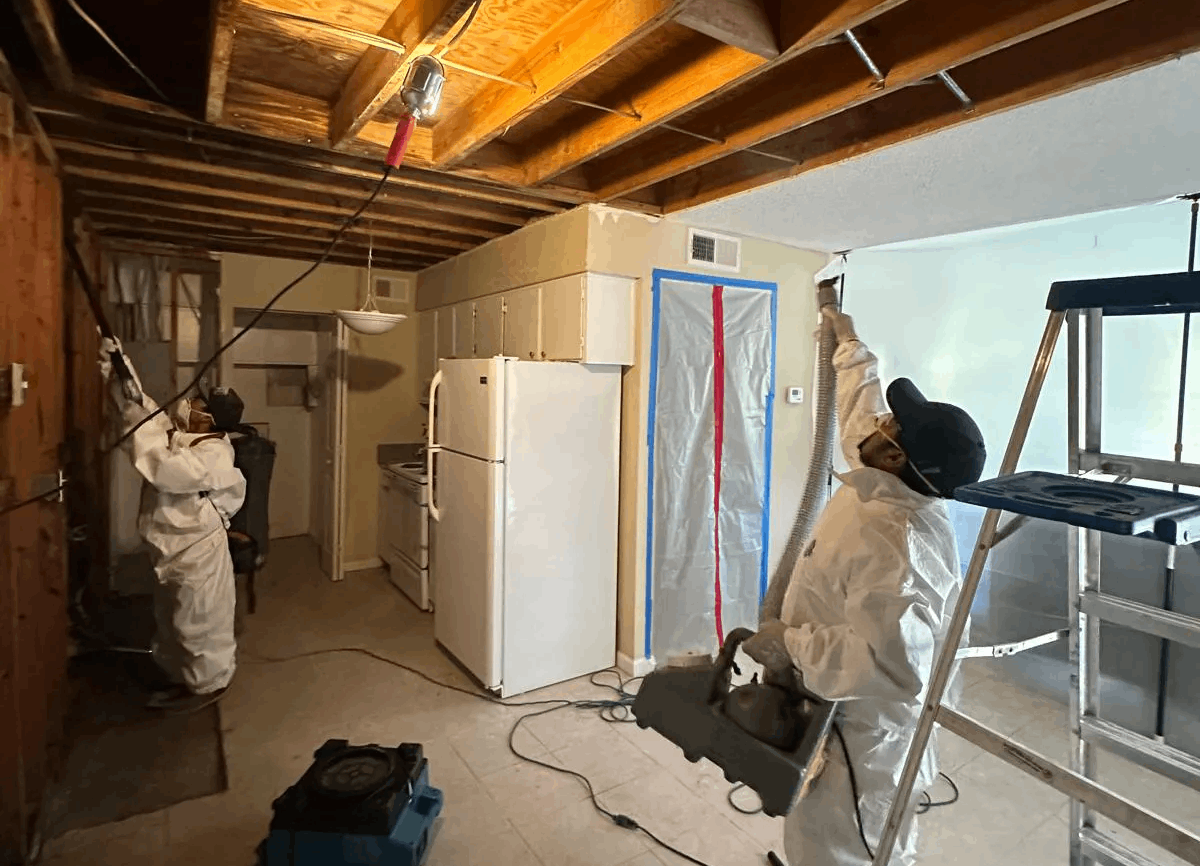
Mold removal cleans visible mold off a surface. Mold remediation goes further. It finds and fixes the moisture problem causing the mold, so it doesn't just come back in a few months.
The terms get used interchangeably online, but they describe two different jobs. Our mold remediation in Raleigh team gets asked about the difference almost every week, usually from someone who already tried cleaning a spot themselves and watched it return. Here's how the two actually compare.
Mold Removal vs. Mold Remediation: A Side-by-Side Comparison
A few of these rows are worth unpacking.
What it targets. Mold removal deals with what you can see. If a shower tile has a dark ring, removal wipes that ring away. Remediation asks a different question first: why is that tile staying wet long enough for mold to grow? The second question is the one that actually prevents a repeat.
Addresses the cause. Removal is a surface fix. Remediation treats the mold and corrects the moisture, whether that's a slow plumbing leak, poor bathroom ventilation, or a crawl space that never fully dries out.
Likely outcome. Mold that gets removed but not remediated tends to come back in the same spot. We see this constantly with homeowners who've cleaned the same bathroom ceiling two or three times a year. Removal buys a few weeks. Remediation buys years, because it closes the door the mold walked through in the first place.
Which One Does Your Situation Need?
Small spots on tile, glass, or sealed grout, with no active leak behind them, are often fine to clean yourself. Anything bigger, tied to a flood or leak, or growing somewhere you can't fully see calls for remediation instead. We cover the specific situations and size thresholds in detail in our guide to when mold remediation is required.
Why Professionals Say "Remediation" Instead of "Removal"
Mold spores exist almost everywhere, indoors and outdoors. Completely eliminating every spore from a property isn't possible, and any company promising total mold removal is overselling what they can do. That's why restoration professionals use "remediation." The goal is bringing mold back down to a normal, safe background level and keeping the moisture that feeds it under control, not chasing an outcome that doesn't exist.
How Summit Approaches Mold Remediation
Every job starts with an inspection using moisture meters and infrared cameras to find the source, not just the visible spot. We contain the area, remove what can't be saved, treat what can, and fix the moisture problem behind it. We're IICRC-certified, licensed and insured, with more than 2,000 projects completed across the Triangle over 15-plus years.
Frequently Asked Questions
Is mold removal the same thing as mold remediation?
No. Removal cleans visible mold off a surface. Remediation also finds and fixes the moisture causing it, which is why it holds up better over time.
Can I just remove mold myself instead of paying for remediation?
Small, isolated spots on hard surfaces are often fine to clean yourself, as long as there's no active leak or flood behind them. Larger areas, hidden mold, or mold that keeps returning need a professional.
Why can't mold ever be completely removed from a home?
Mold spores are naturally present in the air, indoors and outdoors. The realistic goal is keeping mold at a normal, safe level rather than eliminating every spore, which isn't achievable.
If I clean mold myself, will it come back?
It often does if the moisture source wasn't fixed. Mold that returns in the same spot after cleaning is usually a sign that remediation, not just removal, is what the situation actually needs.
Schedule a Mold Inspection in Raleigh, NC
Not sure whether your situation calls for removal or remediation? A professional inspection gives you a clear answer. Call (919) 637-7839 or contact us to find out what your property actually needs.