

How long does mold remediation take? For most homes in Raleigh, the answer is three to ten days, from the first inspection to final clearance. A single bathroom spot can wrap up in two or three days, while a full crawl space with heavy growth can take up to two weeks. The number that matters for your home depends on how much mold you have, where it's growing, and how wet the space still is when we arrive.
At Summit, our IICRC-certified, licensed and insured team has spent 15 years running mold remediation in Raleigh jobs across the Triangle, from small ceiling stains to whole-house infestations tied to a failed sump pump.
Quick Answer: Mold Remediation Timelines by Job Type
These numbers assume a single moisture source. Multiple leaks or long-standing water damage can add days to any category.
The Mold Remediation Process: Timeline by Stage
Every mold job moves through the same four stages. Job size decides how long each one takes, not whether it happens.
Add it up and most residential jobs land in the three to ten day range. Commercial spaces and large-scale water damage cases run longer because there's simply more square footage to cover.
What Affects Your Mold Remediation Timeline
Job size sets the baseline. Where the mold is growing, and a few site conditions, can add or cut days from that estimate.
Crawl spaces run the longest of any job type in Raleigh. Older housing stock here leans heavily on vented crawl spaces, and ground moisture, poor vapor barriers, and North Carolina humidity keep them damp year round, so mold spreads before anyone notices the smell near the crawl space entrance. A full crawl space job runs seven to fourteen days once you count insulation removal, joist and subfloor treatment, and a new vapor barrier. Skip that last step and you're looking at a repeat call within a year.
Attic mold moves faster. Most attic jobs, usually tied to a roof leak or bad ventilation, clear in three to six days, since there's less material to remove and the space is easier to access than a crawl space.
Basement jobs land in a similar range, three to seven days, unless the basement has finished walls or carpet. Porous materials like drywall and carpet padding almost always need to be pulled and replaced, which adds time on both ends of the job.
Beyond location, a few conditions push a job past the average:
- Hidden moisture. If we open a wall and find the leak has been running longer than you thought, we have to trace it further before we can close the job out.
- Toxic mold species. These call for extra containment and testing before we can clear the space.
- Wet materials. Wood and drywall soaked by a recent flood or burst pipe need time to dry before we can treat them, so freshly wet jobs often need a drying period built into the schedule.
Two conditions work in the other direction and keep a job on the short end of the range:
- Early detection. A dark spot on a bathroom ceiling that gets a call the same week is a two or three day fix. The same spot ignored for six months can spread into the subfloor and turn into a much bigger job.
- A single moisture source. When we're not chasing water through multiple rooms, removal and treatment move faster.
Mold Remediation Timelines for Real Estate Transactions
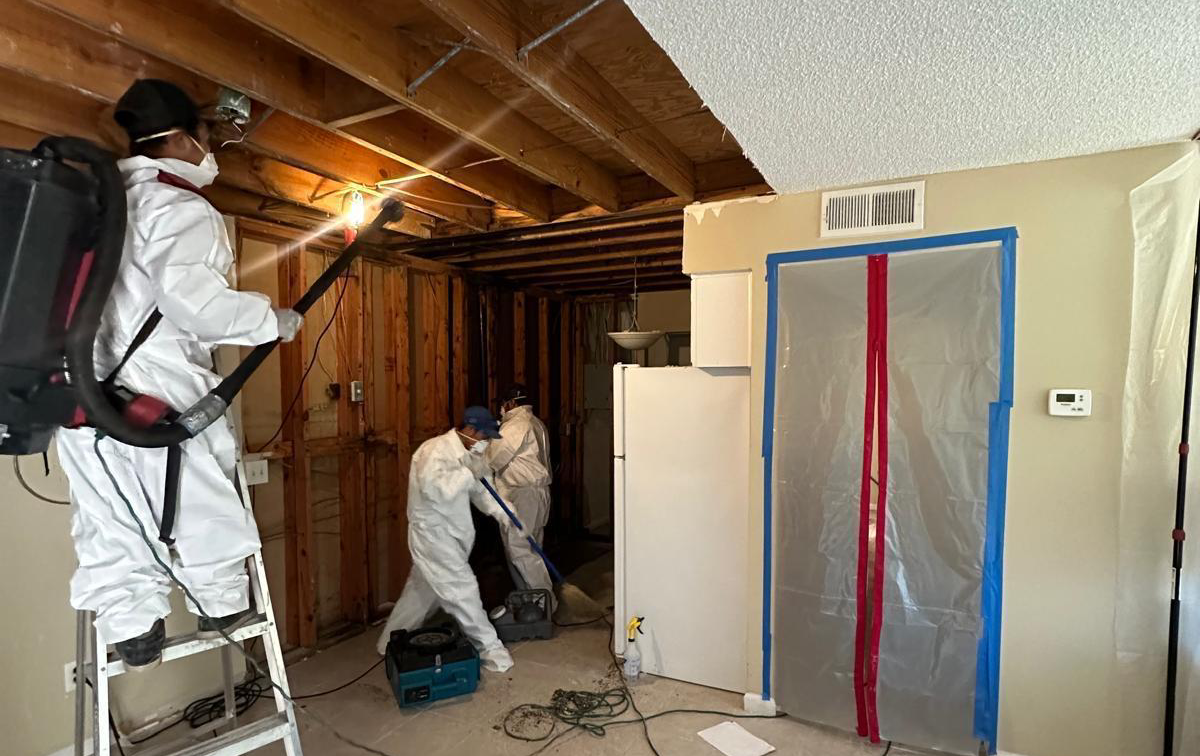
If a home inspector flags mold two weeks before closing, the calendar matters as much as the mold does. We prioritize real estate jobs and give buyers and sellers a clear scope of work up front, so remediation doesn't hold up a sale. Most pre-closing jobs fall on the shorter end of the timeline because sellers tend to catch and treat the problem before it spreads.
How to Prevent Mold From Returning After Remediation
Removing mold without fixing the moisture behind it just buys you a few months. We seal leaks, improve ventilation, and install vapor barriers as part of every job so the same spot doesn't reappear.
If you're not sure whether your home's humidity is part of the problem, indoor air quality testing can confirm it. If the mold started with a leak or flood, our water damage restoration in Raleigh team handles the drying and repair work. That keeps a small problem from turning into a full mold job.
Frequently Asked Questions
How long does mold remediation take for a small bathroom job?
A single bathroom spot, like mold around a shower or on a ceiling patch, usually takes two to three days from inspection to clearance. Most of that time goes to drying and treating the area, not removal.
How long does mold remediation take for a whole crawl space?
Plan on seven to fourteen days for a full crawl space job. That covers removing contaminated insulation, treating joists and subfloor, and installing a new vapor barrier so the moisture doesn't come back.
Can a mold remediation timeline be shortened?
Sometimes. Catching the problem early, before it spreads past the original source, keeps the job on the short end of the range. A job we can start within a few days of your call almost always finishes faster than one where the mold has had months to spread.
Do I need to leave my home during mold remediation?
You don't need to leave the whole house in most cases, but we do ask that you stay out of the contained work area while removal is underway. Once containment comes down and clearance testing confirms the air is safe, the space is yours again.
How soon can I close on a house after mold remediation?
Most single-source mold problems flagged in a home inspection can be remediated within a week, which usually fits inside a standard closing timeline. We give buyers and sellers a written scope of work early so everyone can plan the closing date around it.